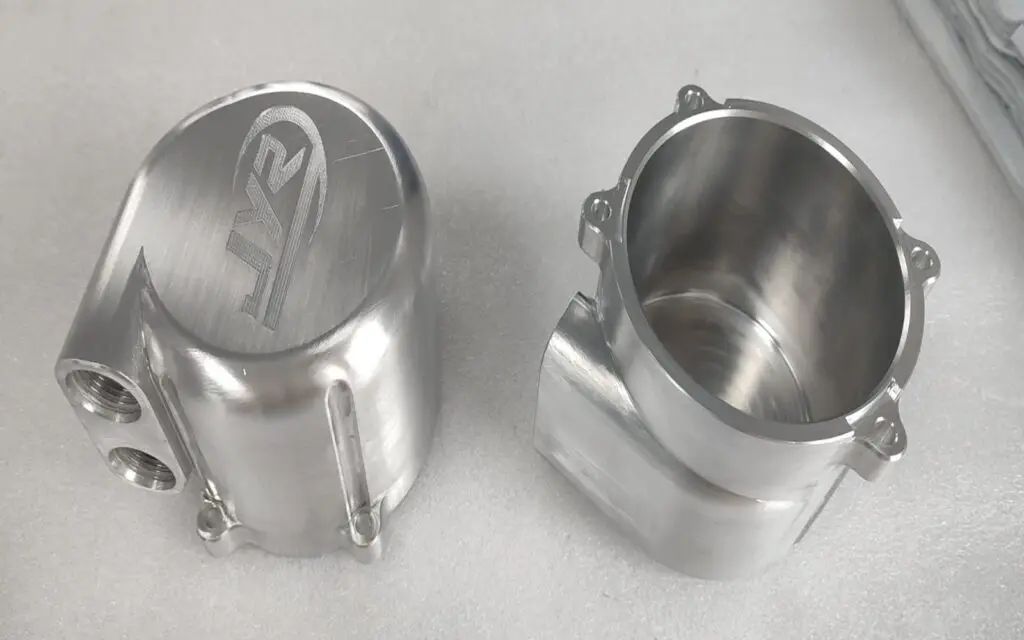
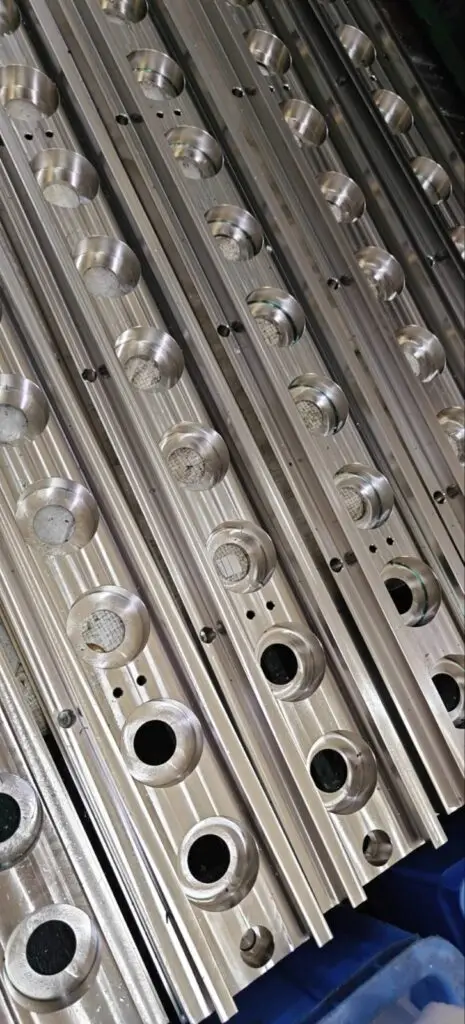
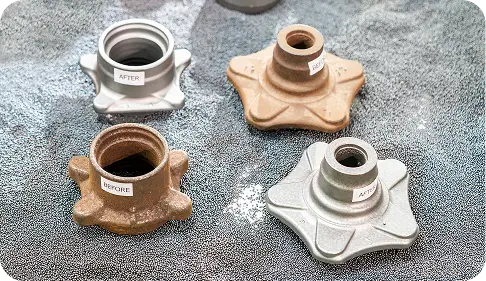
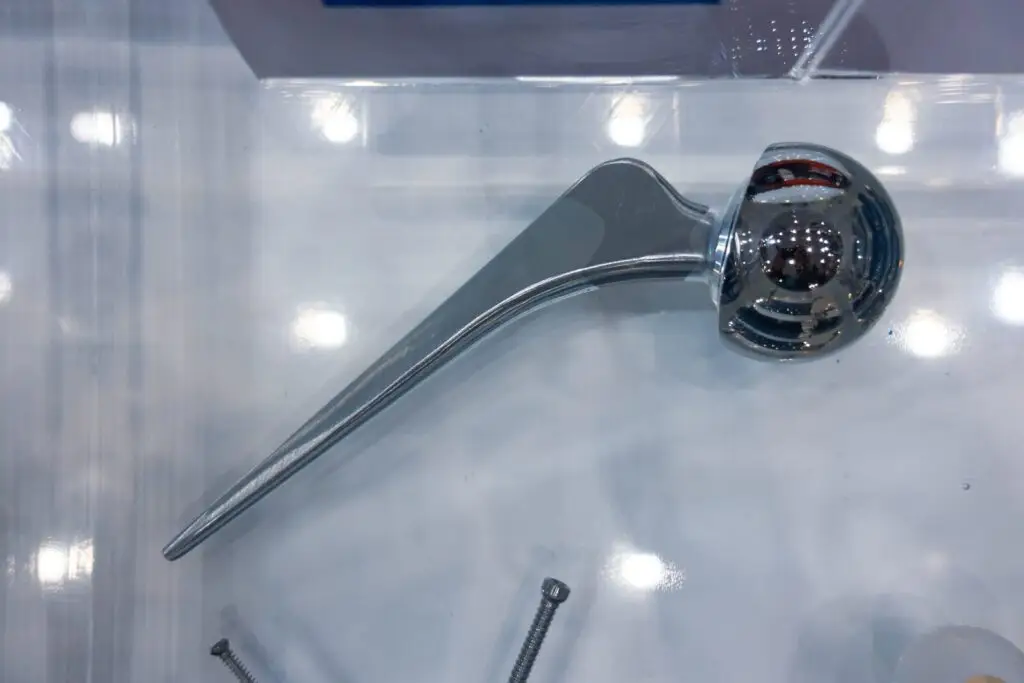
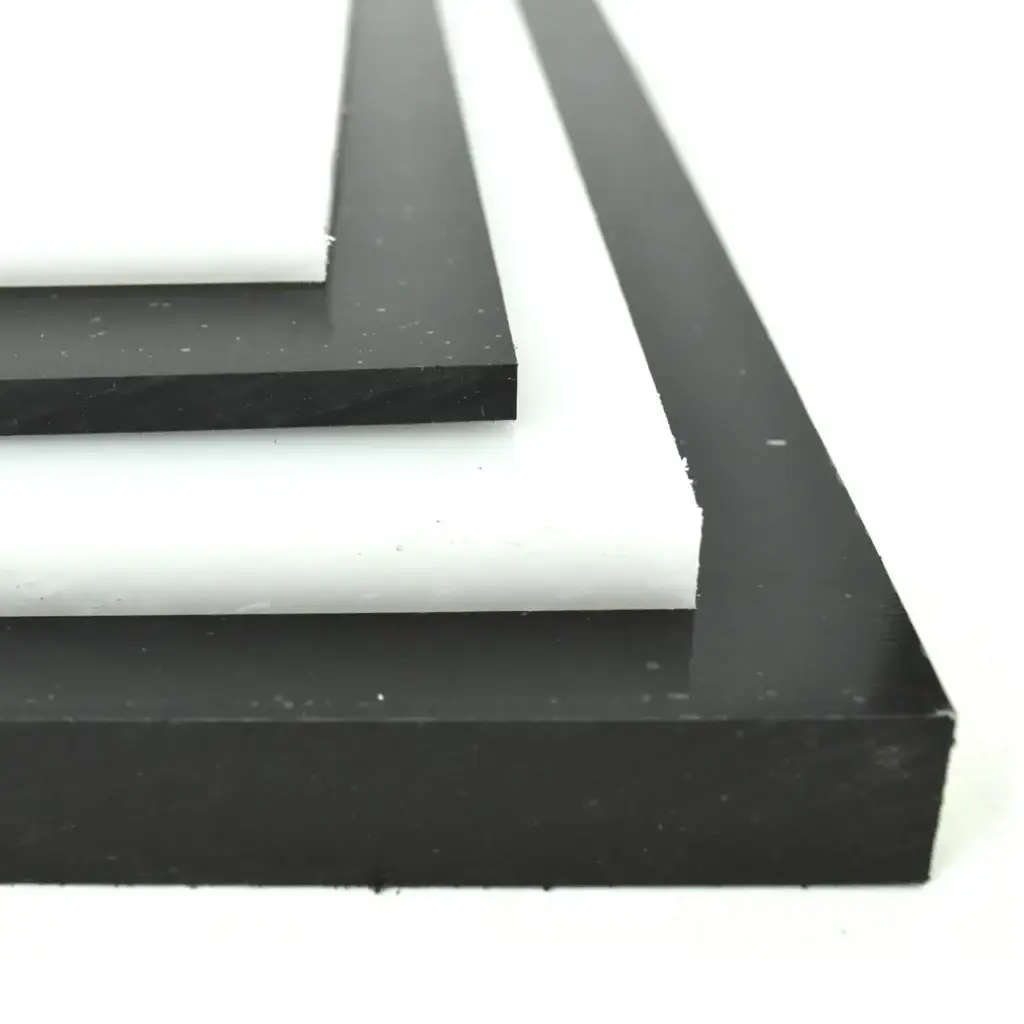
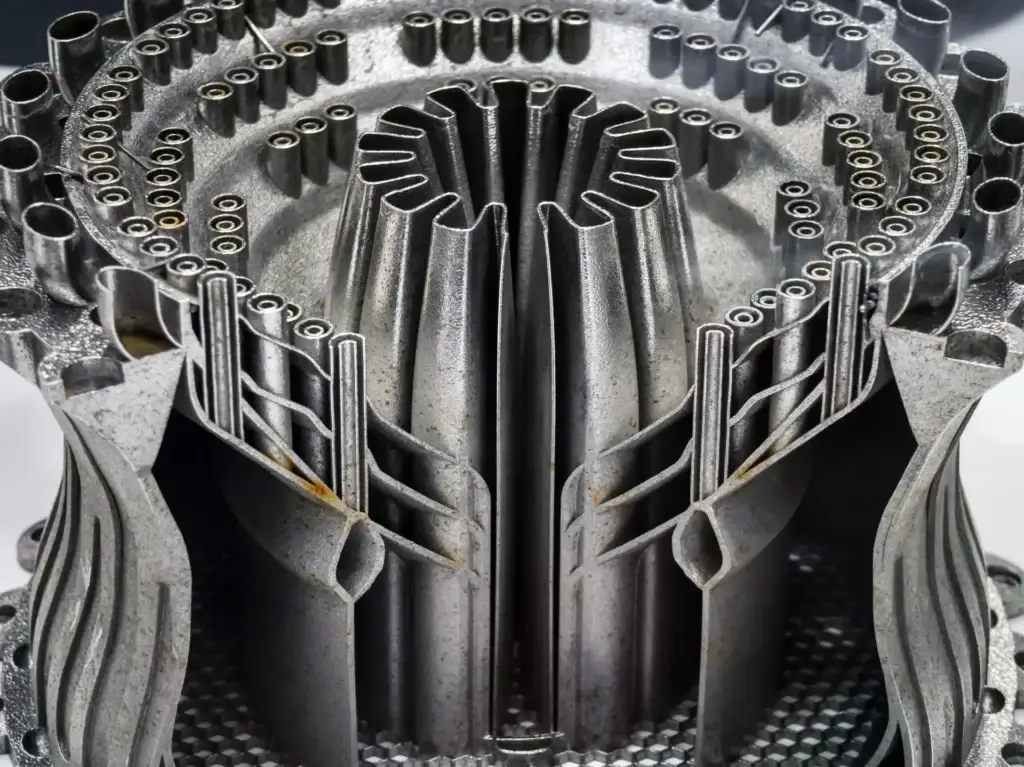
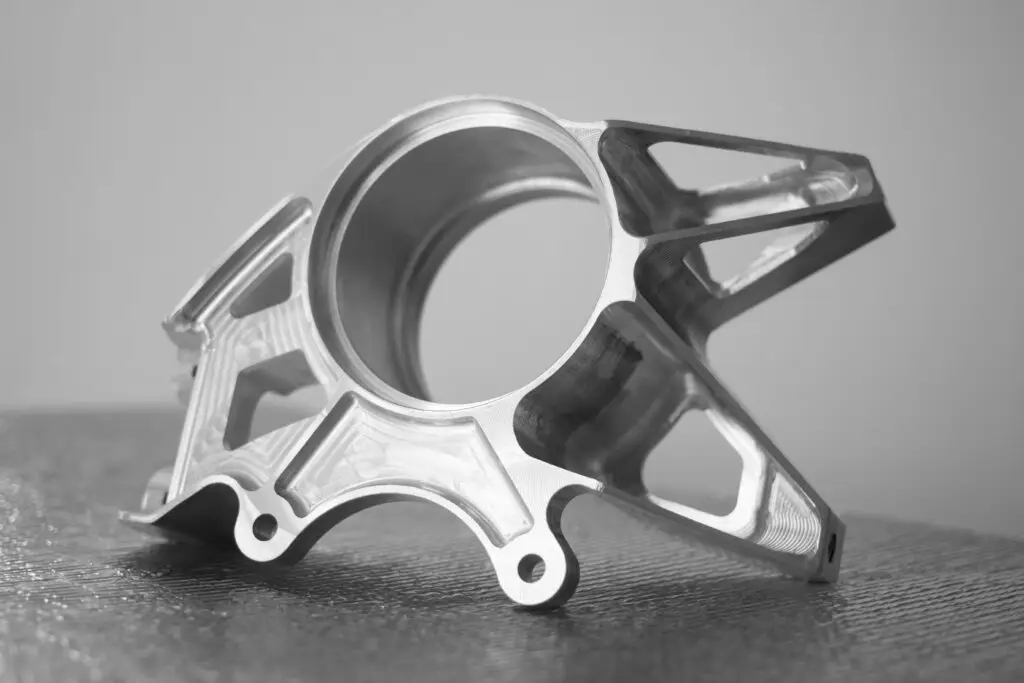
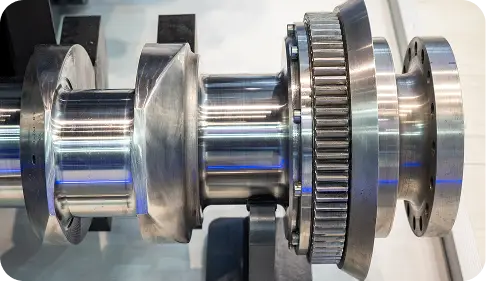
We machine, mold, and print a wide range of metals, engineering plastics, and specialty materials. We help select each material based on your part’s performance, manufacturing, and application requirements.
This is a representative selection. If you don’t see the material you need, ask us! We source materials to specification.
Aluminum
Lightweight, corrosion-resistant, and easy to machine. The default choice for brackets, housings, and fixtures.
Stainless Steel
Corrosion resistance and strength for hardware, shafts, and parts exposed to harsh environments.
Carbon & Alloy Steel
High strength and wear resistance for load-bearing components and tooling.
Titanium
Exceptional strength-to-weight ratio and corrosion resistance for aerospace, motorsport, and select medical applications.
Engineering Plastics
Delrin, nylon, PEEK, PC, and ABS for lightweight, chemical-resistant, and electrically insulating parts.
Additive Materials
PA12 and glass-filled nylon, tough and high-temperature resins, and SLM metals for complex geometry.
BY PROCESS
Material options by manufacturing process
We offer a wide range of materials to support projects from simple prototypes to complex, high-volume production.
CNC Machining
Materials
Aluminum, stainless steel, carbon and alloy steel, titanium, brass, copper, tool steel, and engineering plastics.
Sourcing
Certified suppliers, sourced to specification.
Certification
Material certifications available on request.
Injection Molding
Materials
More than 100 thermoplastic and thermoset resins, including ABS, PC, PC/ABS, nylon, glass-filled grades, POM, and TPE.
Sourcing
Certified suppliers, sourced to specification.
Certification
Material certifications available on request.
Industrial 3D Printing
Materials
Nylon, glass-filled nylon, FDM thermoplastics including ABS, PETG, and TPU, standard and high-temperature resins, engineering composites, and SLM metals.
Sourcing
Certified suppliers, sourced to specification.
Certification
Material certifications available on request.
SURFACE FINISH
Surface finish options
Choose from a variety of finishing processes to match your project’s performance, durability, or aesthetic requirements.
As Machined
Parts are left with visible tool marks and no additional surface treatment. Ideal for functional prototypes or internal components where appearance isn’t critical.
Polished
Removes fine tool marks and smooths surfaces to a semi-gloss or gloss finish. Common for consumer-facing parts and aesthetic prototypes.
Sandblasting
Applies a matte, uniform texture by blasting the surface with fine abrasive media. Great for reducing glare and evening out surface imperfections.
Anodizing
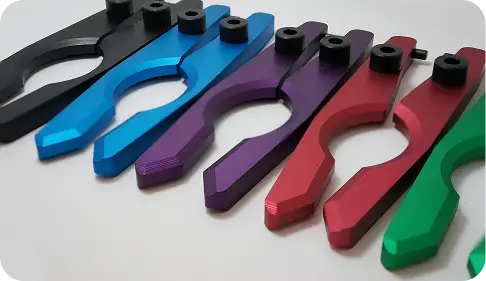
An electrochemical process that increases corrosion resistance and allows for vibrant color finishes (commonly used for aluminum).
Powder Coating
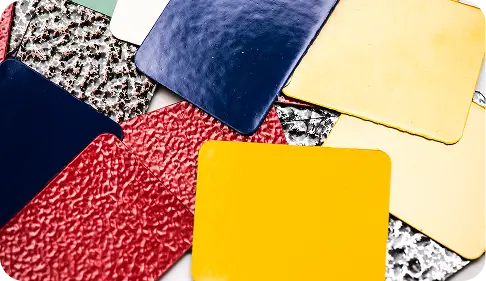
A durable colored finish applied electrostatically and cured with heat. It resists wear, corrosion, and UV exposure, making it an excellent choice for outdoor or high-use parts.
Electroplating
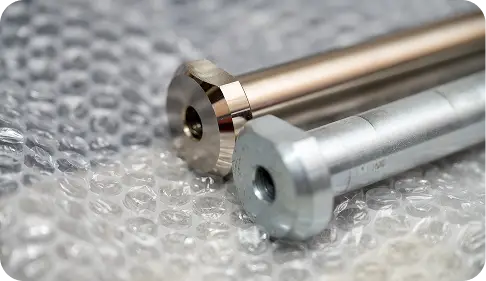
A metallic coating applied through an electrochemical process. It adds corrosion resistance and aesthetic appeal and is commonly used for chrome, nickel, and gold finishes.
ALL MATERIALS
View all our materials
Browse all materials available for CNC machining, industrial 3D printing, and injection molding. Select a process below to filter by manufacturing method.
CNC Machining
Metals and engineering plastics for precision CNC milled and turned parts.
The most widely used material for precision CNC machining. Aluminum 6061-T6 offers an outstanding strength-to-weight ratio, excellent machinability, and natural corrosion resistance. Ideal for structural brackets, housings, aerospace components, and general-purpose machined parts.
Aluminum 7075
High-strength aerospace-grade aluminum alloy commonly used in CNC machined parts requiring maximum strength at minimum weight. 7075-T6 is harder and stronger than 6061 with excellent fatigue resistance — preferred for aircraft structures, high-performance motorsports, and defense applications.
Stainless Steel 304
The most common stainless steel grade for CNC machining. SS 304 offers excellent corrosion resistance, good weldability, and consistent mechanical properties across a wide temperature range. Used in food processing equipment, medical instruments, marine hardware, and industrial components.
Stainless Steel 316
Marine and medical-grade stainless steel with superior corrosion resistance due to molybdenum content. Used in chemical-processing equipment, marine hardware, food-processing equipment, and selected medical components when the specified grade and documentation meet the application requirements.
Carbon Steel 1018
A low-carbon mild steel offering excellent machinability and good surface finish at a cost-effective price point. 1018 is case-hardenable and widely used for CNC machined shafts, pins, rods, and general-purpose structural components where maximum strength is not required.
Carbon Steel 4140
A versatile chromium-molybdenum alloy steel with high tensile strength, good toughness, and excellent response to heat treatment. 4140 is the go-to CNC machining material for gears, shafts, spindles, tool holders, and high-stress structural components.
Brass C360
Free-machining brass is one of the easiest metals to CNC machine, producing excellent surface finishes at high speeds. C360 offers good corrosion resistance, electrical conductivity, and natural antimicrobial properties — ideal for fittings, valves, connectors, and decorative parts.
Copper C110
Electrolytic tough-pitch copper offering maximum electrical and thermal conductivity for CNC machined components. Used in electrical bus bars, heat sinks, RF components, and applications requiring the highest conductivity available in a machinable metal.
Titanium Ti-6Al-4V
The aerospace standard titanium alloy — offering exceptional strength-to-weight ratio, full biocompatibility, and outstanding corrosion resistance. CNC machined titanium parts are used in aerospace structures, medical implants, motorsports components, and high-performance applications where weight and strength both matter.
Tool Steel H13
A premium hot-work tool steel used for CNC machined mold components, dies, and tooling inserts. H13 provides excellent wear resistance, thermal fatigue resistance, and retains hardness at elevated temperatures — the standard material for injection mold tooling and die casting inserts.
Acetal (POM; Delrin® grades available)
The top-choice engineering plastic for precision CNC machining. Delrin (polyoxymethylene) offers excellent dimensional stability, very low moisture absorption, low friction, and natural self-lubricating properties. Used for precision gears, bearings, bushings, valve seats, and components requiring tight tolerances.
Nylon (PA6 / PA66)
A tough, impact-resistant engineering plastic commonly used in CNC machined structural and wear components. Nylon offers good fatigue resistance and self-lubricating properties but absorbs moisture — making it important to account for dimensional change in tight-tolerance applications.
PEEK
Polyetheretherketone (PEEK) is the highest-performance engineering plastic available for CNC machining. With chemical resistance, continuous service temperature to 250°C, and near-metal mechanical strength, PEEK is used in aerospace brackets, medical device components, semiconductor equipment, and demanding chemical processing applications.
Polycarbonate (PC)
A high-impact transparent engineering plastic well-suited to CNC machining for optical, structural, and enclosure applications. Polycarbonate offers outstanding impact resistance — up to 250× stronger than glass — making it ideal for machine guards, sight glasses, and structural housings.
PTFE (Teflon™ grades available)
Polytetrafluoroethylene (PTFE) has the lowest friction coefficient of any solid material, making it ideal for CNC machined seals, gaskets, bearings, and chemical-contact components. Chemically inert to virtually all substances, PTFE performs in temperatures from -200°C to +260°C.
HDPE
High-density polyethylene (HDPE) is a cost-effective, chemically resistant plastic for CNC-machined parts used in food-contact, chemical-handling, and outdoor applications. It machines easily and provides excellent impact and moisture resistance at a low material cost.
Industrial 3D Printing
Thermoplastics, high-performance polymers, metal powders, and resins for additive manufacturing.
The most widely used material for industrial SLS 3D printing. PA12 nylon produces strong, isotropic parts with no support structures required — enabling complex internal geometries impossible with other processes. Excellent for functional prototypes, end-use components, and production manufacturing of complex plastic parts.
Nylon PA12-GF (SLS)
Glass-filled PA12 nylon for industrial SLS 3D printing offers significantly increased stiffness and improved dimensional stability over standard PA12. Used for structural brackets, enclosures, and components requiring lower thermal expansion and higher rigidity in demanding mechanical applications.
Carbon Fiber Reinforced Nylon (FDM)
Chopped or continuous carbon-fiber reinforcement can increase nylon’s stiffness and strength-to-weight performance. Available processes and mechanical properties vary by material system and printing method. Produces structural components with near-aluminum mechanical performance at a fraction of the weight — ideal for tooling, end-of-arm fixtures, and performance structural parts.
ABS (FDM)
Acrylonitrile butadiene styrene (ABS) is a popular FDM 3D printing material offering good impact resistance, moderate heat resistance, and excellent post-processability. ABS can be acetone-smoothed for a clean surface finish — widely used for functional prototypes, enclosures, and design validation models.
Polycarbonate (FDM)
Industrial-grade polycarbonate for FDM 3D printing provides high impact strength and heat resistance to 110°C — significantly higher than standard FDM materials. Used for functional testing, tooling aids, and production parts requiring toughness and temperature performance beyond standard ABS.
TPU / TPE (Flexible)
Thermoplastic polyurethane (TPU) for FDM and SLS 3D printing produces flexible, rubber-like parts with excellent abrasion resistance and chemical resistance. Available in Shore A 80–95 hardness ranges — used for seals, gaskets, protective covers, grips, and flexible functional components.
PEEK (FDM High-Performance)
PEEK 3D printed parts via high-temperature FDM offer the same outstanding mechanical, chemical, and thermal performance as machined PEEK — with the added ability to produce complex internal geometries. Used in aerospace components, medical devices, semiconductor equipment, and demanding chemical environments.
PEI (ULTEM™ grades available)
Select flame-retardant PEI grades are used in aircraft interiors and other applications requiring documented flame, smoke, and toxicity performance. With heat resistance to 170°C and excellent mechanical strength, ULTEM-printed parts meet the demanding requirements of aircraft cabin components, industrial tooling, and high-temperature fixtures.
Titanium Ti-6Al-4V (SLM)
Metal 3D printed titanium via Selective Laser Melting (SLM) produces aerospace-grade components with full material density, complex internal geometries, and the outstanding strength-to-weight ratio of Ti-6Al-4V. Used in aerospace brackets, medical implants, and high-performance motorsports components where machining is cost-prohibitive.
Stainless Steel 316L (SLM)
SLM 3D printed 316L stainless steel produces fully dense metal components with excellent corrosion resistance and good ductility. Used in chemical-processing equipment, marine hardware, food-processing equipment, and selected medical components when the specified grade and documentation meet the application requirements.
Aluminum AlSi10Mg (SLM)
The most widely used metal for SLM 3D printing. AlSi10Mg offers a good combination of lightweight performance, thermal conductivity, and mechanical strength comparable to cast aluminum. Used for heat exchangers, aerospace housings, automotive components, and complex structural parts where weight reduction is critical.
Inconel 625 (SLM)
Inconel 625 superalloy 3D printed via SLM produces high-temperature, corrosion-resistant metal components for the most demanding applications. With service temperatures above 980°C and outstanding oxidation resistance, Inconel 3D printed parts are used in turbine components, exhaust systems, and aerospace applications where conventional machining is extremely difficult.
Standard Photopolymer Resin (SLA)
SLA standard resin produces parts with the highest detail resolution and smoothest surface finish available in 3D printing. Ideal for visual prototypes, presentation models, investment casting patterns, and applications requiring fine feature detail. Note: standard resin is brittle and not recommended for functional load-bearing applications.
Engineering Resin (SLA / DLP)
Engineering-grade SLA/DLP resins offer improved toughness and ABS-like mechanical properties compared to standard photopolymer. Used for functional prototyping, snap-fit features, and design validation where both surface quality and basic mechanical performance are required.
Castable Resin (SLA)
Castable photopolymer resin burns out cleanly in investment casting processes, enabling the production of highly detailed metal parts via lost-wax casting. Used in jewelry manufacturing, dental prosthetics, and aerospace investment casting for producing complex metal geometries with excellent surface finish.
Injection Molding
Commodity, engineering, and high-performance thermoplastics for plastic injection molding.
The world’s most widely used injection molding material. Polypropylene (PP) offers an excellent balance of chemical resistance, light weight, and low cost, with unique living hinge capability for one-piece integrated hinged components. Used in automotive interior parts, consumer goods, food containers, and industrial components across virtually every industry.
Polyethylene HDPE
High-density polyethylene (HDPE) is a cost-effective injection-molding material with excellent chemical, moisture, and low-temperature impact resistance. Food-contact grades are available when appropriate materials and documentation are specified. HDPE is commonly used for pipe fittings, chemical containers, consumer products, and outdoor components requiring moisture or UV resistance.
Polystyrene (GPPS / HIPS)
General-purpose polystyrene (GPPS) offers optical clarity for transparent injection-molded parts, while high-impact polystyrene (HIPS) adds toughness for structural applications. A low-cost, easy-to-process material used for consumer packaging, display components, and disposable medical devices.
ABS
Acrylonitrile butadiene styrene (ABS) is the most common engineering plastic for injection molding — offering an excellent balance of impact resistance, surface finish quality, and ease of processing. ABS paints, plates, and bonds easily, making it the standard material for consumer electronics housings, automotive interior trim, and appliance components.
Polycarbonate (PC)
Injection-molded polycarbonate (PC) delivers outstanding impact resistance and optical clarity for demanding structural and transparent applications. PC is the material of choice for safety glazing, automotive lighting lenses, medical device housings, and electronic enclosures requiring toughness combined with a premium appearance.
PC-ABS Blend
Polycarbonate-ABS blend combines the superior impact resistance of polycarbonate with the better flow and processability of ABS — producing complex injection-molded parts with excellent mechanical performance. The automotive industry standard for interior components, dashboards, and painted structural parts requiring tight tolerances and high-quality surface finish.
Nylon PA6 / PA66
Injection-molded nylon (polyamide) offers excellent wear resistance, self-lubricating properties, and good fatigue strength for mechanical components. PA6 processes more easily; PA66 offers higher heat and chemical resistance. Used for gears, bearings, cable ties, under-hood automotive parts, and industrial mechanical components.
Acetal (POM; Delrin® grades available)
Acetal (POM) injection molding produces the most dimensionally stable plastic parts available — with very low moisture absorption, excellent fatigue resistance, and natural self-lubrication. The preferred material for precision gears, threaded components, valve bodies, pump parts, and any injection-molded component requiring tight dimensional tolerances.
PC-ABS (Flame Retardant)
Flame-retardant PC-ABS grades meet UL94 V-0 flammability requirements for injection-molded electronic and electrical enclosures, switch gear, and appliance components. Combines the structural performance of PC-ABS with the safety certifications required for electrical and consumer electronics applications.
TPU / TPE (Flexible)
Thermoplastic polyurethane (TPU) and thermoplastic elastomer (TPE) injection molding produces flexible, rubber-like parts that can be over-molded directly onto rigid substrates. Used for soft-touch grip surfaces, seals, gaskets, protective boots, medical device components, and consumer products requiring flexibility without the cost of traditional rubber tooling.
Polypropylene Glass-Filled
Glass-fiber-reinforced polypropylene (PP-GF) dramatically increases the stiffness, strength, and dimensional stability of standard PP — enabling injection-molded structural components in lightweight, cost-effective applications. Used in automotive structural parts, power tool housings, and industrial equipment where standard PP lacks the required rigidity.
Nylon Glass-Filled (PA-GF)
Glass-reinforced nylon (PA-GF) offers significantly higher stiffness and improved dimensional stability compared to unfilled nylon, with reduced moisture absorption. The standard material for injection-molded structural mechanical components in automotive under-hood applications, industrial machinery, and consumer power tools.
PEEK (High-Performance)
Injection-molded PEEK (polyetheretherketone) is the highest-performance thermoplastic available — offering continuous service temperature to 250°C, near-metal strength, exceptional chemical resistance, and biocompatibility. Used in aerospace components, medical implants, semiconductor equipment, and chemical processing applications where no other plastic meets the requirements.
PEI (ULTEM™ grades available)
Ultem PEI injection molding produces inherently flame-retardant, high-strength structural components with heat resistance to 170°C. FAA-rated for aircraft interior applications, ULTEM is also used in medical device sterilization trays, electrical connectors, and industrial components requiring high-temperature performance with a premium surface finish.
FAQ
Questions, answered
Have a question that is not answered here? Contact our engineering team directly and we will get back to you quickly.
We accept major 3D CAD formats, including STEP, IGES, SolidWorks, Parasolid, and STL. PDF and DXF drawings are also helpful for communicating dimensions, tolerances, materials, and finish requirements.
How fast can parts be made?
Timing depends on the process, material, quantity, and complexity of your parts. Quotes are typically provided within 24 hours. Prototype orders may be completed in as little as 1 to 10 business days, while larger production orders may require additional time.
Can you hold tight tolerances?
Yes. We can hold tolerances as tight as ±0.001 inch on critical features when the material, geometry, and manufacturing process allow it. Include a drawing with your CAD files so our engineering team can review each tolerance requirement.
What industries do you serve?
We support customers across automotive, industrial equipment, consumer products, product development, and other industries that require dependable custom parts. Contact us to discuss the requirements for your application.
Do you offer surface finishing services?
Yes. Available finishes include anodizing, powder coating, plating, polishing, and other options based on the material and manufacturing process. Tell us your appearance and performance requirements when requesting a quote.
What happens after I submit a quote request?
Our engineering team reviews your files, material, quantity, tolerances, and finish requirements. We will contact you if we have questions, then provide clear pricing, estimated timing, and the next steps for production.
READY TO BUILD?
Get a quote from a real person, not AI.
Upload your CAD files and project details. Our engineering team reviews manufacturability and typically returns a detailed quote within 24 hours.